
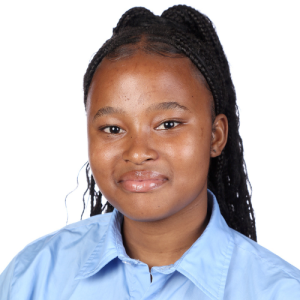

On any volleyball court, the captain stands out. They are often the first to pursue a stray ball, the one energizing teammates during huddles, or the steady voice encouraging everyone to remain calm during a critical set. Yet, beneath the uniform and the armband lies something more profound: leadership rooted in trust, responsibility, and perseverance. At this year’s Goliath Cup volleyball tournament, I spoke with first-team captains who shared what the sport means to them—and what it truly takes to lead from within the game. As it turns out, being captain isn’t just a title; it’s a mindset, a mission, and sometimes, a quiet act of courage.
“A great leader leads by example and demonstrates perseverance and a strong work ethic.”
For Rebecca Lynch, captain of the under-19 first team girls, the role of captain is rooted in effective decision-making. As both the captain and the setter, her decisions affect the team, consequently testing her critical thinking skills. When interviewed, she stated, “A great captain communicates effectively, keeping teammates motivated and focused while also listening to their concerns,” highlighting the importance of communication and a strong voice when given the armband. Lynch demonstrated a democratic leadership style, prioritizing her teammates’ queries while remaining neutral in game plans. “It’s important to remain calm under pressure, making decisions in critical moments, to maintain team morale,” said Lynch.
“Sometimes you’re the glue.”
For Taylor Baines, co-captain of the under-19 girls’ first team, the biggest challenge wasn’t volleyball—it was navigating personalities. “I feel like what makes us unique is the different personalities on the team; we’re able to make jokes but also get serious,” Baines admitted. As captain, she struggled with balancing friendship and authority. “It’s difficult at times to find that balance between holding your friends and teammates accountable and being flexible enough to make those intense decisions, whether you’re liked or not.” As co-captain, Baines serves as a bridge between the teammates and the captain. As she has grown into the team, she has consulted with her coach and captain when a decision rests on her shoulders. “I definitely think asking for advice from my coach and captain has helped me since I’ve been appointed as vice; it’s truly an honour,” exclaimed Taylor Baines.
“A good team off the pitch is a good team on the pitch.”
Mikhail Herold, captain of the under-19 boys, emphasized the importance of respect and a strong team bond among his teammates. “I always strive to motivate my team, keeping them on par with the game and just having an overall healthy and emotionally stable mindset,” said Herold. When asked how he keeps the younger players and seniors on the same wavelength, Herold stated that patience and assertiveness form the foundation of this. “I always try to make small talk with the young ones, whether it’s just me greeting them in the hallway or encouraging them during practice, so they’re comfortable,” explained Mikhail. While maintaining this role as a leader, Mikhail emphasized the importance of humility, stating, “As much as I am a captain, I’m still a player, and understanding that is what keeps me balanced as both a player and a leader.”
When asked about the biggest lesson they learned about being a captain and volleyball in general, the three shared distinct yet insightful responses.
“Good communication” – Rebecca Lynch. “Clear communication prevents confusion among teammates, and thus they’re able to focus on the game, and everyone understands their tasks and roles.”
“Effort” – Taylor Baines. “It’s so important to take practice seriously and work hard, because that’s what shapes how an actual game will go.”
“Respect” – Mikhail Herold. “Respect is very important, because I don’t believe that teammates who do not respect each other can coexist; respect means there’s a better sense of chemistry among teammates.”
In the end, being a volleyball captain isn’t about being the loudest voice or the best player on the court—it’s about being the one others can count on. It’s about showing up every single day with purpose, lifting teammates when they’re down, and leading not just with words but with actions.
These captains have proven that leadership is less about the spotlight and more about service: “You can’t fix what’s not broken, but you can improve and cover up the cracks to improve the quality”—Mikhail Herold. They carry the weight of responsibility with pride, not pressure. They are the emotional anchors, the motivators, the voice in the chaos and the calm after the storm. The legacy they leave behind will echo in every huddle, every high five, and every teammate who felt seen, supported, and inspired.
Because great captains don’t just lead teams—they build them.